Time dilation at work.
There was a phase when I realized free time does not always show up by itself. Sometimes you have to hunt for it slowly, slip it between work, fatigue, the commute home, and a head that is still noisy.

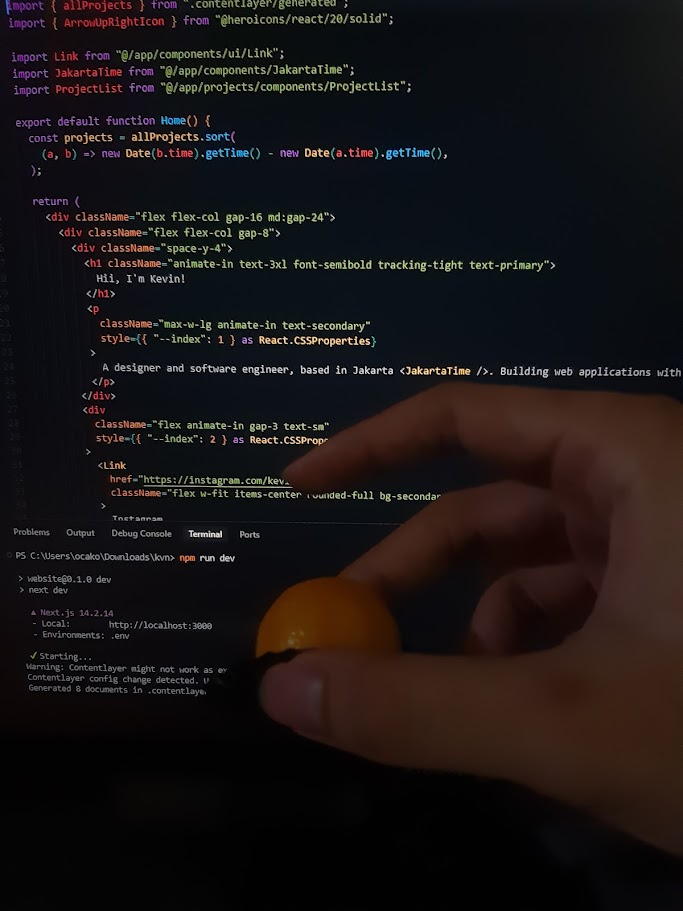

It was messy at first. Coming home from work, body heavy, feet full of street dust, but my head still felt guilty if the day ended without touching code at all. I often opened the laptop meaning “just a little.” Ten minutes later the screen was still on, and I was already asleep at the keyboard.
Over time I realized what I needed was not motivation. Motivation burns out too easily, especially after a full day on your feet, meeting lots of people, and going home through Jakarta, a city with its own ways of making you tired. What made more sense for me was a small schedule that sticks to the shift.
Because my work schedule rolls, the coding pattern has to flex too. Not a perfect schedule, just realistic enough to live with without feeling like I am forcing myself.
The small schedule I use
| Jam | What | Honest notes |
|---|---|---|
| 06:30 | Wake up, V60 coffee | no coffee = dead |
| 08:00 | Leave / scooter | Jakarta morning, ~40 min |
| 09:00–18:00 | CK shift / Morning | sales, stock count, POS |
| 18:45 | Get home | eat, shower, 20 min lie-down. mandatory. |
| 19:30–23:00 | CODING | easy target: 1 commit. done. |
| 23:15 | Sleep | if it runs long till 12, tomorrow I am sleepy, oh well |
| 08:00 | Wake a bit later | thankful for a little extra sleep |
| 09:30–11:30 | MORNING CODING | brain still fresh; only 2 hours but sharp |
| 11:30–12:30 | Shower, eat, leave | commit first, then go. ritual. |
| 13:00–22:00 | CK shift / Afternoon | closing, exhausted |
| 22:45 | Get home | honestly just want to crash |
| 23:15–00:00 | Review / write a plan | just 45 min, notes for tomorrow morning |
| 00:15 | Sleep | still aiming for 7 hours |
On a morning shift, the most realistic window I use is 19.30 to 23.00. Not always full, not always ideal, but enough to open the editor, finish one small thing, then commit before sleep.On an afternoon shift, the most valuable time is actually 09.30 to 11.30. Those two hours are short, but the head is still clear. At night I usually only review a bit and write a plan for tomorrow. For me, the point is not looking productive. The point is keeping the rhythm from breaking for too long.
“One small commit is still better than waiting a week for the mood.”
a small note under the monitor
Small things that keep the rhythm going
1. Don't make the laptop feel far away.
The smallest thing I learned: if starting already feels heavy, I lose early. So I rarely shut the laptop down fully.
Just sleep. Open the lid, return to the last file, continue from where I left off yesterday.
It sounds trivial, but often the only reason I start is that the barrier was made as small as possible.
2. Write the to-do before sitting at the laptop.
If I only decide what to do after the laptop is open, I usually just stare. So I make a habit of writing small tasks
from my phone. Sometimes in the morning before the store gets busy; sometimes on the way home when an idea appears.
It does not have to be big. “Tidy a button”, “check a form”, “fix mobile layout”. What matters is when night comes,
I am not starting from a blank page.
3. Some days really need to stay empty.
I used to force myself to keep coding even when my body clearly wanted to stop. The result was not productivity, just
messy code and a ruined mood the next day. Now I accept that some days are only for going home, eating, showering,
then sleeping. Sometimes keeping a rhythm does not mean always moving. Sometimes it means knowing when to stop.
Use what your head can handle
The stack I use is not because it is the coolest. JavaScript, a small server, utility CSS, MySQL, Git. Things I
know well enough, light enough, and realistic for the time I have.
If you only have a few hours after work, don't make life heavier with a stack you do not need yet.
Use what can get you moving first. Level up later when you actually need it.
You don't have to ship a big product right away. Sometimes it is enough to start from a small problem you hit yourself. Stock tools, notes, simple automation, a personal page. Anything that makes life a bit cleaner.
Take it slow. If today you only manage one small commit, that still counts as moving.